A New Way to Detect Burnout Early: The Brain Optimization Framework
Burnout rarely happens overnight.
For many high-performing professionals, parents, and caregivers, it develops slowly — beginning with subtle signs like fatigue, reduced focus, irritability, or feeling mentally “wired but tired.”
Over time, chronic stress can begin to affect the brain systems responsible for focus, emotional regulation, and energy. When stress continues without adequate recovery, it may increase vulnerability to burnout, anxiety, and depression.
Recognizing these early warning signs is critical.
That’s why Dr. Rozina Lakhani, MD, MPH, psychiatrist, Clinical Professor at the University of Washington, and founder of Shifa Health, has introduced the Brain Optimization Framework — a practical model designed to help people identify stress overload early and strengthen resilience before burnout takes hold.
This work builds on the foundation of her bestselling book Stress to Joy, which continues to guide readers in understanding how chronic stress impacts mental health.
Why Early Burnout Detection Matters
Many people push through stress without realizing how much pressure their brain is under.
Common early signs may include:
Persistent mental fatigue
Difficulty concentrating
Irritability or emotional exhaustion
Feeling overwhelmed by daily tasks
Reduced motivation or creativity
Sleep disturbances
Physical tension or headaches
When these symptoms persist, the brain’s stress systems can become overactivated, making it harder to recover energy and emotional balance.
According to Dr. Rozina:
“When stress continues without recovery, it can gradually affect the brain’s systems responsible for focus, emotional regulation, and energy.”
Understanding this progression allows individuals to intervene before burnout becomes severe.
The Brain Optimization Framework
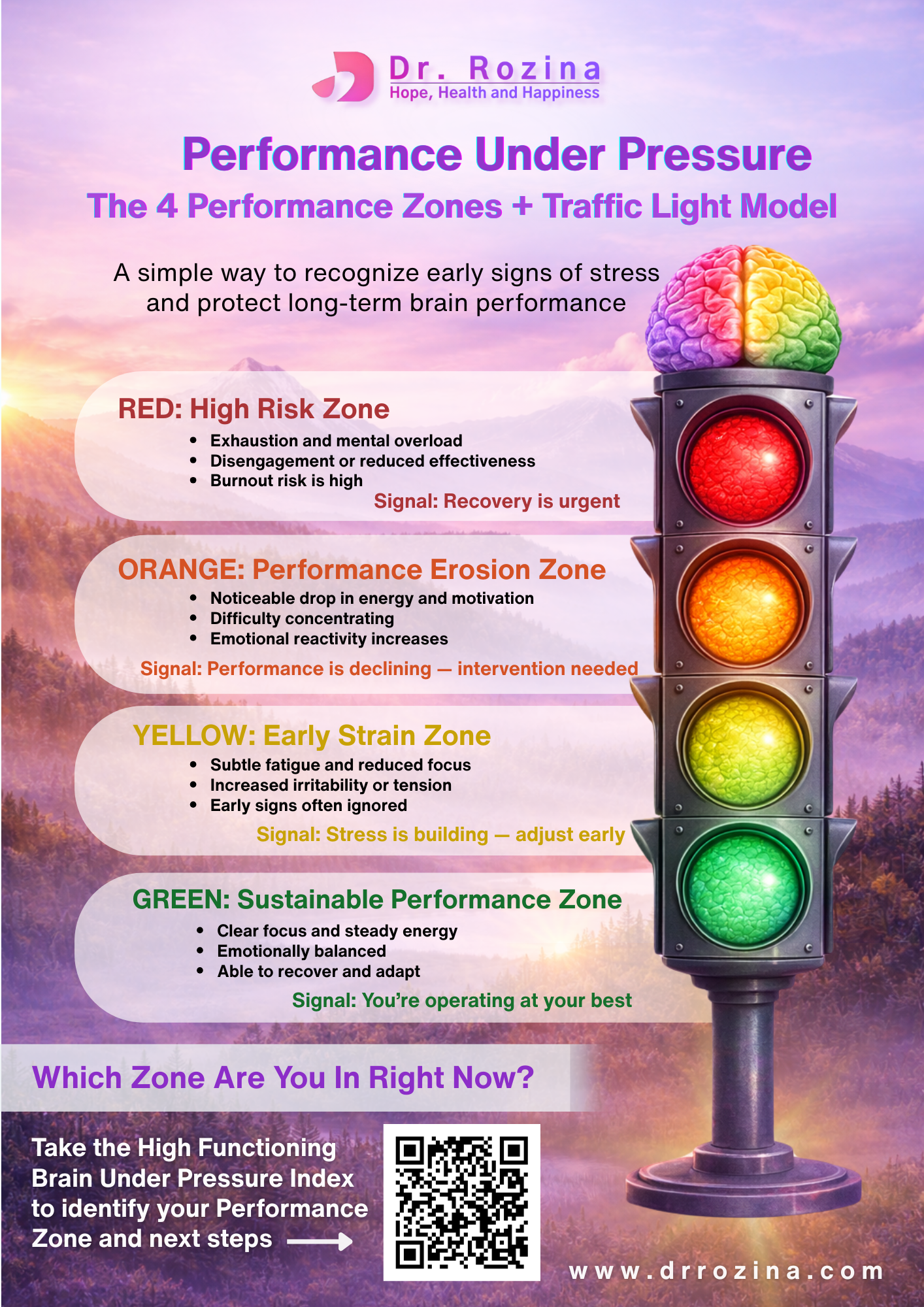
The Brain Optimization Framework is designed to help people understand how their brain performs under pressure.
At its core is a traffic-light inspired model that identifies performance zones related to stress and recovery.
These zones help individuals recognize where they currently fall on the spectrum between optimal performance and burnout risk.
Green Zone – Sustainable Performance Zone
In this state, the brain is balanced and resilient. Individuals experience:
Mental clarity
Sustained energy
Emotional stability
High productivity
Healthy stress levels can actually support motivation and focus.
Yellow Zone – Early Strain Zone
Increased pressure begins to affect cognitive performance.
Signs may include:
Mild fatigue
Reduced concentration
Irritability
Feeling overwhelmed
This stage is an important early warning signal.
Orange Zone – Performance Erosion Zone
If stress continues without recovery, the brain begins to struggle to maintain performance.
Individuals may experience:
Emotional exhaustion
Brain fog
Reduced productivity
Detachment or cynicism
Red Zone – High Risk Sustainability Zone
At this stage, mental and emotional resources are severely depleted.
Symptoms may include:
Chronic exhaustion
Loss of motivation
Increased anxiety or depression
Difficulty functioning in work or daily life
Recognizing these zones allows people to take proactive steps to protect their mental well-being.
The High Functioning Brain Under Pressure Index

To make this model practical, Dr. Rozina developed the High Functioning Brain Under Pressure Index.
This self-assessment helps individuals evaluate how their brain is responding to stress by measuring patterns related to:
Stress load
Cognitive strain
Burnout risk
Emotional regulation
Mental performance under pressure
The goal is not simply to diagnose burnout — but to identify early signals and strengthen resilience before problems escalate.
You may take the assessment by clicking here
From Overload to Optimization
One of the core messages of Dr. Rozina’s work is that stress does not have to lead to burnout.
The Brain Optimization approach highlights a progression many people experience:
Overload → Decline → Optimization
Without intervention, prolonged overload can lead to burnout-related decline.
However, when individuals learn to recognize early warning signs and apply effective recovery strategies, the brain can shift back toward optimization, restoring clarity, energy, and emotional balance.
This process is supported by neuroplasticity, the brain’s ability to adapt and strengthen healthier patterns.
The Brain Optimization Book Series
Dr. Rozina’s growing Brain Optimization book series explores how stress affects the brain and provides practical tools for building resilience.
Stress to Joy
This bestselling book explains how chronic stress impacts brain function and emotional well-being, while offering strategies to restore balance and resilience.
The Ultimate Toolkit to Rewire Your Anxious Brain
This guide introduces science-based techniques that help calm the nervous system and retrain anxious thought patterns through neuroplasticity.
Work Burnout Recovery (Upcoming)
This upcoming book focuses on how prolonged stress evolves into burnout and offers practical strategies to rebuild energy, restore motivation, and protect long-term mental health.
Be Part of the Early Reader Team and Get a Free Copy of the Book in exchange for an honest review on Amazon.
The 5-Minute Gratitude Journal
This daily reflection journal helps reinforce neural pathways associated with optimism, resilience, and emotional well-being.
Together, these resources help individuals understand how chronic stress affects the brain — and how resilience can be strengthened through practical, evidence-based strategies.
Dr. Rozina’s Mission
Dr. Rozina’s work is driven by a simple but powerful mission:
To empower people with knowledge and practical tools to prevent mental illness and optimize long-term brain health.
Through education, assessments, and practical tools, she aims to help individuals recognize stress patterns early and build sustainable mental resilience.
Learn More
To learn more about Dr. Rozina’s work and resources:
Visit: www.drrozina.com
Explore books and tools: happyandhealthymind.com/books
This press release was originally published via ACCESS Newswire